A supplier passes its audit. Months later, a finished assembly is awaiting dispatch when a quality engineer reviewing the final inspection package discovers that the gauge used to measure a critical bore was overdue for calibration at the time of inspection. The expeditor sees an order on schedule. The quality engineer sees a measurement that needs review before release. Both are looking at the same order, but the production milestone and the inspection evidence sit in different records.
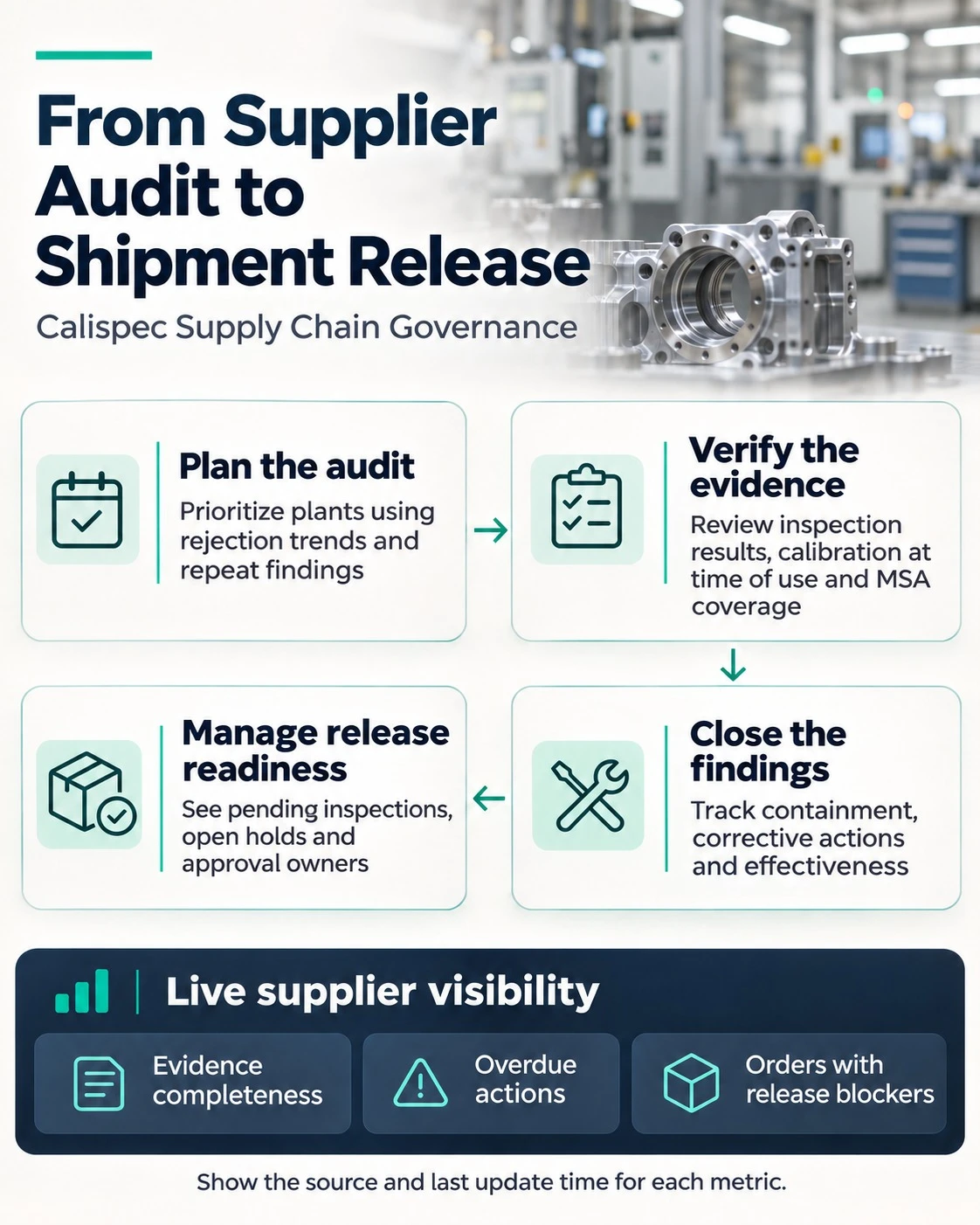
Calispec Supply Chain Governance connects inspection results, measurement evidence, supplier findings and order milestones. Quality and expediting teams can see what has been verified, what could delay dispatch and who owns the next decision. Supplier auditors can use those same records to assess how controls performed between visits.
Start with the inspection result
To determine whether an inspection result supports shipment release, a reviewer may need to know which drawing or control plan revision applied, what was measured, which lot or serial number it came from and which instrument was used. With those records linked, a supplier quality engineer can move from the order to the affected characteristic and its evidence without reconstructing the inspection history from spreadsheets, certificates and email attachments.
For a critical-to-quality (CTQ) characteristic, the reviewer can check the gauge’s calibration status at the time of use. Where measurement system analysis (MSA) is required, the reviewer can also check whether an applicable study covers the measurement method and conditions. The calibration record shows the instrument’s status when the measurement was taken. The MSA study helps establish whether the measurement system is suitable for that application.
Turn an inspection exception into a release decision
In the assembly example, the overdue calibration triggers an impact review. The team needs to identify which results were recorded with that gauge, which lots those results belong to and whether affected material is awaiting dispatch or has already moved downstream. Where gauge usage is captured against inspection results, Calispec can help trace those records so quality can assess the scope, place affected lots on hold as needed and request reinspection with a suitable instrument.
The order can show production complete alongside quality release pending, with the reason, action owner and expected completion date visible to expediting. Once acceptable reinspection evidence is available, the authorized reviewer can record the release decision and its basis. The order history then shows which result prompted the review, what the supplier did to resolve it and who approved release. Any longer-term corrective action can remain open for effectiveness verification after the affected lots have been dispositioned.
Give expediting team a current view of shipment readiness
An order can be physically complete while a witness inspection, a required evidence package or a final approval is still outstanding. Bringing quality conditions and order milestones into the same view lets expeditors identify what could affect the committed dispatch date and follow up with the person responsible.
Which orders need attention? Calispec highlights upcoming dispatch dates, overdue inspection milestones and orders with unresolved issues that could delay release.
What is holding up release? Teams can see failed or pending inspections, active quality holds, missing evidence and approvals awaiting action.
Is the inspection evidence complete? Reviewers can see which required records have been received and accepted, and which inspection, calibration or measurement system analysis (MSA) records are still outstanding.
Who owns the next action? Each outstanding action shows the person responsible, the due date and the latest recorded update.
Which supplier plants show recurring problems? Teams can track lot rejection trends, repeat deviations and overdue corrective actions, with drill-down by supplier plant and part where records are linked.
Inspection results, findings and approvals entered in Calispec can be reflected as teams record them. Purchase-order commitments, production milestones and shipment events depend on how often the ERP, supplier or other connected source provides updates. Seeing the source and last update time helps an expeditor interpret a newly raised quality hold alongside an earlier dispatch forecast.
Use shipment evidence to plan the next supplier audit
The next supplier audit can start with evidence generated during routine operations. If a plant repeatedly submits incomplete inspection packages, the auditor can sample how records are reviewed before submission. If several orders were held because gauges were overdue at the time of use, the auditor can examine gauge issuance, point-of-use checks and exception handling. Where a corrective action has already been implemented, the auditor can sample subsequent lots to assess whether it worked.
Plant-level detail matters. A supplier’s overall score may look healthy while one site repeatedly misses witness inspections or struggles to demonstrate measurement system suitability for a specific process. Drilling down from the scorecard to the affected plants, parts and orders helps the audit team decide where to focus. Clear metric definitions support that decision. Lot rejection rate should show rejected lots against total lots assessed for the period. MSA coverage should use the characteristics that require a study as its denominator. Evidence completeness should reflect the records required for the applicable inspection or release stage.
Follow corrective action into the next order
An audit finding can be linked to its owner, due date, corrective action and implementation evidence. Supplier quality can then review later inspection records to see whether the process change held. Procurement and expediting can see which actions affect current delivery commitments and which are being monitored across subsequent orders.
Before the assembly ships, the quality team needs acceptable reinspection results and approval from the person authorized to release the affected lots. At the next audit, the team can check whether the plant has changed how it verifies gauge validity at the point of use. With Calispec, both decisions can draw on the same traceable inspection records.